

简介
Summary:
Publisher Summary 1
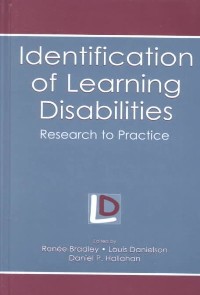
Identification of Learning Disabilities: Research to Practiceis the remarkable product of a learning disabilities summit conference convened by the Office of Special Education Programs (OSEP) in August 2001 and the activities following that summit. Both the conference and this book were seen as important preludes to congressional reauthorization of the historic Individuals With Disabilities Education Act(IDEA) scheduled for 2002 and subsequent decision making surrounding implementation. The OSEP conference brought together people with different perspectives on LD (parents, researchers, practitioners, and policymakers) and resulted in this book, which examines the research on nine key issues concerning the identification of children with learning disabilities. Coverage includes alternative responses to treatment, classification approaches, processing deficit models, and approaches to decision making.
Chapter Structure-- Each of the first nine chapters is organized around a lengthy, issue-oriented paper, which presents the most current research on that topic. These primary papers are then followed by four respondent papers that reflect a variety of viewpoints on the topic.
Summarizing Chapter-- A small group of researchers (listed in the final chapter) dedicated an enormous amount of time to summarizing the research and developing key consensus statements regarding the identification of children with learning disabilities. Their work is sure to have a tremendous impact on future discussions in this area.
Expertise-- The following well-known scholars have helped summarize the vast amount of research presented in this book as well as the consensus statements derived therefrom: Lynne Cook, Don Deshler, Doug Fuchs, Jack M. Fletcher, Frank Gresham, Dan Hallahan, Joseph Jenkins, Kenneth Kavale, Barbara Keogh, Margo Mastopieri, Cecil Mercer, Dan Reschley, Rune Simeonsson, Joe Torgesen, Sharon Vaughn, and Barbara Wise.
目录
Table Of Contents:
Foreword xix
Acknowledgments xxiii
Introduction xxv
Learning Disabilities: Historical Perspectives 1(98)
European Foundation Period (c. 1800 to 1920) 1(5)
Research on Brain-Behavior Relationships 1(2)
Research on Reading Disabilities 3(3)
U.S. Foundation Period (c. 1920 To 1960) 6(16)
Language and Reading Disabilities 6(9)
Perceptual, Perceptual-Motor, and Attention Disabilities 15(7)
Emergent Period (c. 1960 to 1975) 22(9)
Introduction of the Term Learning Disabilities 22(2)
Federal Involvement 24(3)
Parent and Professional Organizations Founded 27(1)
Educational Programming: Dominance of psychological Processing and Visual Perceptual Training 27(4)
Solidification Period (c. 1975 to 1985) 31(7)
Solidification of the Definition 32(1)
Federal Regulations for Identification of Learning Disabilities 33(1)
Empirically Validated Educational Procedures 34(3)
Learning Disabilities Professional Organization Turmoil 37(1)
Turbulent Period (c. 1985 to 2000) 38(15)
Learning Disabilities Definitions 38(2)
Continuation of Research Strands of the Learning Disabilities Research Institutes 40(3)
Research on Phonological Processing 43(1)
Biological Causes of Learning Disabilities 44(2)
Concern over Identification Procedures 46(2)
Debate Over the Continuum of placements 48(2)
Postmodernism and Learning Disabilities 50(3)
References 53(12)
Endnotes 65(8)
Response to ``Learning Disabilities: Historical Perspectives'' 69(4)
References 73(6)
Response to ``Learning Disabilities: Historical Perspectives'' 75(4)
References 79(3)
Response to ``Learning Disabilities: Historical Perspectives'' 81(1)
The Federal Role 82(2)
Inclusion for Better or Worse? 84(2)
References 86(3)
Response to ``Learning Disabilities: Historical Perspectives'' 89(1)
The Search for a Condition (or Category) 89(3)
The Search for Cause 92(1)
The Search for Cures (or Remedies) 92(1)
On Over-Representation 93(2)
Concluding Remarks 95(2)
References 97(2)
Early Identification and Intervention for Young Children with Reading/Learning Disabilities 99(86)
Background: Skilled Reading and Reading Disability 100(10)
Reading Comprehension and Word Reading 100(3)
Ways to Read Words 103(1)
The Basis for Orthographic (Word) Reading Skill 104(3)
The Basis for Decoding Skill 107(1)
Skilled Reading and Reading Disabilities 107(3)
Early Identification of Students at Risk for Reading/Learning Disabilities 110(8)
Degree of Prediction Error 112(2)
Solving the Problem of Floor Effects 114(1)
Recent Efforts to Predict RD in Kindergarten 114(2)
Using Screening Measures to Establish Intervention Criteria 116(2)
Early Intervention for Students at Risk for Reading/Learning Disabilities 118(16)
Teaching Phonological Awareness 118(6)
Teaching Alphabetic Reading Skill (Decoding) 124(7)
Promoting Orthographic Reading Skill (Fluency) 131(3)
Final Thoughts 134(4)
Alternative Approaches to Understanding and Treating Reading/Learning Disability 136(2)
References 138(14)
Classroom Prevention Through Differentiated Instruction: Response to Jenkins and O'Connor 151(1)
Skillful Reading Entails Mastering One's Writing System 152(1)
Predicting Risk Versus Disability 153(3)
Implications for Intervention 156(2)
References 158(7)
From An ``Exploded View'' of Beginning Reading Toward a Schoolwide Beginning Reading Model: Getting to Scale in Complex Host Environments 163(2)
Getting Schools as Complex Host Environments to Scale 165(5)
Conclusion 170(1)
References 171(3)
Early Identification and Intervention for Young Children with Reading/Learning/Disabilities 173(1)
Skilled Reading Versus R/LDs 174(1)
Early Identification 174(2)
Early Intervention 176(1)
Conclusion 177(1)
References 178(2)
Response to ``Early Identification and Intervention for Young Children with Reading/Learning Disabilities'' 179(1)
Accuracy of Classification 180(2)
Dangers in Drawing Conclusions 182(1)
More Unanswered Questions 183(1)
Conclusion 184(1)
References 184(1)
Classification of Learning Disabilities: An Evidence-Based Evaluation 185(102)
Introduction 185(1)
What Is Classification? 186(1)
Definitions of Learning Disabilities: Implicit Classifications Made Explicit 187(3)
Discrepancy Hypothesis 190(16)
Isle of Wight Studies 190(1)
Is There A Bimodal Distribution? 190(1)
Can IQ-Discrepant and Low Achieving Poor Readers Be Differentiated? 191(7)
Other Forms of LD and the IQ-Discrepancy Hypothesis 198(3)
Psychometric Issues 201(4)
Conclusions: Discrepancy Hypothesis 205(1)
Heterogeneity Hypothesis 206(17)
Listening and Speaking 206(1)
Reading Disabilities 206(9)
Math Disabilities 215(6)
Written Expression 221(1)
Conclusions: Heterogeneity 221(2)
Exclusion Hypothesis 223(9)
Social, Economic, and Cultural Disadvantage 224(2)
Instruction 226(1)
Constitutional Factors 227(4)
Conclusions: Exclusionary Criteria 231(1)
Future Directions for Classifications of LD 232(19)
Psychometric Approaches Are Limited 233(1)
IQ Tests Are Not Needed 234(1)
``Slow Learner'' Is Not a Useful Concept 235(1)
Response to Intervention Is Important 236(1)
Consensus Process 237(1)
Learning Disabilities Are Real Phenomena 238(1)
References 239(12)
Redefining LD Is Not the Answer: A Response to Fletcher, Lyon, Barnes, Stuebing, Francis, Olson, Shaywitz, and Shaywitz 251(1)
The Reality 251(1)
The Concept of LD Vs. Its Operational Definition 252(1)
Implications for Practice 253(1)
Classification of LD and Response to Treatment 254(1)
Implications for Research 255(1)
Summary and Conclusions 256(2)
References 258(5)
A Response to Classification of Learning Disabilities: An Evidence-Based Evaluation 263(1)
Entitlement 263(1)
Heterogeneity to Specificity 264(2)
Teacher Competencies 266(1)
Terminology Pitfalls 266(1)
Field Realities 267(1)
Politics 268(1)
Underachievement 269(1)
Summary 270(1)
References 270(7)
The Sociopolitical Process of Classification Research: Making the Implicit Explicit in Learning Disabilities 273(4)
References 277(2)
Classification of Learning Disabilities: Convergence, Expansion, and Caution 279(1)
Convergence 279(1)
Expansion 280(2)
Caution 282(2)
References 284(3)
Learning Disabilities as Operationally Defined by Schools 287(82)
Authoritative Definitions of Learning Disabilities 288(1)
The Process Prescribed in Idea Guiding School Identification 289(2)
Stage 1: The Importance of Teacher Referral 291(3)
Stage 2: Assessment 294(3)
Stage 3: Placement Committee Deliberations 297(2)
Developments Further Expanding the Concept of LD in the Public Schools 299(1)
Deletion of ``Borderline Mental Retardation'' 300(1)
How This Expanded the LD Category 301(1)
Variations in LD Characteristics Across Sites 302(4)
The Need to Acknowledge Urban Special Education 306(1)
Changes in the Importance of Differential Diagnosis 306(4)
Variability Within the SI LD Population 310(1)
Issues Raised About the Current Process 311(1)
Eligibility Using a One-Time-Only Assessment 312(3)
Assumed Intrinsic/Neurobiological Etiology of LD 315(2)
Curricular Consequences of the Heterogeneity of SI LD Populations 317(2)
Where are We Now and Where Might We Go? 319(1)
Titration of Intensity of Treatments in Decision Making 320(1)
Issue of Intelligence Testing 321(2)
Efforts to ``Fix'' LD: The Need for a Broader Perspective 323(1)
LD and Social Cuss 324(1)
Concluding Remarks 325(2)
References 327(6)
Endnote 333(1)
Acknowledgments 333(2)
A Look at Current Practice 335(1)
Deciding Which Children to Serve 335(3)
A Proposed Model 338(3)
A Meta-Research Commentary on MacMillan and Siperstein's ``Learning Disabilities as Operationally Defined by Schools'' 341(1)
The Main Points 341(1)
Meta-Research Commentary 342(1)
Research Strategies 343(1)
Need for Tolerance 344(2)
Lessons We Should Have Learned 346(1)
Where We (Continue to) Go Wrong 347(1)
The Real Problem 348(1)
References 349(1)
Endnote 350(2)
Leveling the Playing Field: Commentary on ``Learning Disabilities as Operationally Defined by Schools'' 351(1)
The Pseudo-Objective Process of Identification and Referral for Services 352(1)
Toward the Future: Instructional Strategies for the Disenfranchised 352(1)
Educating the Disenfranchised 353(1)
Ability to Benefit from Treatment: Valid Alternative, or Yet Another Pipe Dream? 354(1)
Some Considerations as We Begin to Level the Playing Field 355(2)
References 357(2)
Acknowledgments 359(2)
Minority Overrepresentation: The Silent Contributor to LD Prevalence and Diagnostic Confusion 361(1)
State Variations 361(1)
Reasons for MMR Decline 362(1)
Overrepresentation 363(1)
Summary 363(2)
NICHD Dyslexia Studies 365(1)
Universal Screening and Early Intervention 365(1)
Outcomes Criteria 366(1)
Summary 367(1)
References 367(2)
Discrepancy Models in the Identification of Learning Disability 369(98)
Discrepancy and Intra-Individual Differences 369(1)
Cognitive Discrepancies 370(1)
Origins of Ability-Achievement Discrepancy 371(2)
Discrepancy and LD Identification: Rules and Regulations 373(1)
Formula-Based Discrepancy 373(1)
Quantifying Discrepancy: Methods 374(1)
Grade-Level Deviation 374(1)
Expectancy Formulas 375(1)
Problems and Issues 375(2)
Discrepancy Score Components 377(1)
Standard Score Methods 378(1)
Difference Scores 379(1)
Regression Methods 379(2)
Evaluation of Regression Methods 381(2)
Evaluation of Discrepancy Methods 383(1)
Practical Difficulties 384(1)
Instability of Discrepancy Scores 384(1)
Discrepancy and the Identification of Learning Disability 385(2)
Statistical Classification vs. Clinical Judgment 386(1)
Vagaries of Identification and Prevalence 387(1)
Confounding Among High-Incidence Mild Disabilities 388(1)
Confounding Between Learning Disability and Low Achievement 389(2)
Learning Disability Vs. Low Achievement Debate 391(1)
Reanalysis of the Minnesota Studies 392(2)
Examining Learning Disability and Low Achievement Samples 394(1)
Learning Disability and Intelligence 395(1)
The Role of Intelligence in Definitions 396(1)
Defining Learning Disability Without Intelligence 397(3)
Learning Disability and Low Achievement: Quantitative or Qualitative Differences? 400(1)
Qualitative Distinctions in Mental Retardation 401(1)
Qualitative Distinctions in Learning Disability 401(2)
The Status of Discrepancy in the Identification of Learning Disability 403(4)
Conclusion 407(1)
References 407(20)
There's More to Identifying Learning Disability Than Discrepancy 427(1)
Foundational Concepts About Learning Disability 427(2)
Identification Issues: General 429(3)
Fallibility 430(1)
Balance 430(2)
Who's Who? 432(1)
Summary 433(1)
References 434(1)
Endnote 435(3)
A Functional and Intervention-Based Assessment Approach to Establishing Discrepancy for Students with Learning Disabilities 437(1)
The Problem Solving Model 438(3)
Evaluation Results 441(1)
Does the Problem Solving Model Increase the Rates of Students with High-Incidence Disabilities? 442(1)
Does the Problem Solving Model Increase the Effectiveness of Prereferral Strategies? 442(1)
Do the Students Identified with the Problem Solving Model Look Significantly Different Than Traditional LD Students? 443(1)
Does the Problem Solving Model Affect the Number of Students of Color Referred and Identified for Special Education? 443(1)
Are Parents Satisfied with the Problem Solving Model? 444(1)
Conclusion 445(1)
References 446(1)
Acknowledgments 447(6)
Discrepancy Models in the Identification of Learning Disability: A Response to Kavale 449(4)
References 453(5)
Do Discrepancy Models Satisfy Either the Letter or the Spirit of Idea? 457(1)
Concurrent Validity 458(1)
Predictive Validity 458(1)
Failure of the Discrepancy Definition 459(1)
The Low Achievement Definition 459(2)
Spirit vs. Letter of the Law 461(2)
Identification As a Means to an End 463(1)
References 464(3)
Responsiveness to Intervention: An Alternative Approach to the Identification of Learning Disabilities 467(98)
Paradigms of LD Classification 469(8)
Referral 469(1)
Testing 470(1)
Team Recommendation 470(1)
Implications of Competing Paradigms in LD Identification 471(2)
Definitions of LD and the Discrepancy Approach 473(1)
Brief Recent History of LD 473(1)
Issues in Defining LD: The LD/LA Disputes 474(2)
IQ-Achievement Discrepancy and LD Definition 476(1)
Responsiveness to Intervention 477(12)
Historical Background: Aptitude H Treatment Interaction 477(2)
Brief Overview of ATI Research 479(1)
Responsiveness to Intervention Defined 480(1)
Treatment Validity 481(1)
Support for a Treatment Validity Approach 482(1)
Requirements for Adopting a Treatment Validity Approach 483(1)
Ability to Model Academic Growth 483(2)
Validated Treatment Protocols 485(3)
Distinguishing Between Acquisition and Performance Deficits 488(1)
Models of Responsiveness to Intervention 489(10)
Predictor-Criterion Models 489(1)
Dual-Discrepancy Model 490(4)
Functional Assessment Models 494(2)
Visual Inspection 496(1)
Reliable Changes in Behavior 496(2)
Social Validation 498(1)
Conclusion 499(8)
Unresolved Issues in the Alternative Responsiveness-To-Intervention Approach 500(7)
References 507(12)
Notes 519(3)
Three Conceptualizations of ``Treatment'' in a Responsiveness-To-Treatment Framework for LD Identification 521(1)
Three Approaches to Conceptualizing Treatment 522(5)
Intensive Remediation 522(3)
Intensive Prevention 525(1)
General Education Prevention 526(1)
Conclusions 527(1)
References 528(4)
Responsiveness to Interventions: The Next Step in Special Education Identification, Service, and Exiting Decision Making 531(1)
Issues With the Current System 532(2)
Abandoning ATI-Based Processes 533(1)
Intelligence-Achievement Discrepancy 534(1)
Responsiveness to Intervention-Proposal and Reactions 534(6)
Early Intervention And Prevention 534(1)
Diagnosing Solutions 535(2)
Application of Responsiveness to Intervention Approaches 537(1)
Successful Exit of Special Education 538(2)
OSEP Support for Enhancing Outcomes for Students with Disabilities 540(2)
Alignment of Responsiveness-To-Intervention Practices with IDEA Philosophy 540(1)
Disability Services With or Without Categorical Designations 541(1)
OSEP Support for Improvements in Professional Practices 541(1)
Conclusion 542(1)
References 542(7)
Using Response to Treatment for Identifying Students With Learning Disabilities 549(1)
Is LD Real? 549(1)
How Accurately Can We Identify Students With LD? 550(1)
Can Response to Treatment be used as a Means to Identify Students with LD? 551(1)
What are the Potential Concerns Regarding the Effective Use of Response to Treatment as a Means of Identifying Students with LD? 552(1)
Should a Response-to-Treatment Model be used for Identifying Students as Learning Disabled? 553(1)
References 554(1)
On the Role of Intervention in Identifying Learning Disabilities 555(1)
The IQ-Achievement Discrepancy Revisited 555(2)
Models of Responsiveness to Remediation 557(1)
The Importance of Schoolwide Involvement 558(1)
Concerns About the Diagnostic Team 558(1)
Length and Intensity of Remediation 559(1)
EARLY Identification of At-Risk Children 560(1)
Sources of Opposition to Gresham's Proposal 560(2)
Summary 562(1)
References 562(2)
Acknowledgments 564(1)
Empirical and Theoretical Support for Direct Diagnosis of Learning Disabilities by Assessment of Intrinsic Processing Weaknesses 565(88)
What is Meant by the Term ``Intrinsic Processing'' Weaknesses? 567(1)
The Use of Processing Language in Different Levels of Explanation 567(4)
Distinctions Among Types of Psychological Processes 571(3)
Ways in Which Psychological Processes Can Cause Individual Differences in Performance 574(1)
Summary 575(1)
Evidence for Intrinsic Processing Weaknesses as the Cause of Specific Learning Disabilities 576(1)
The Theory of Phonologically Based Reading Disabilities 577(3)
The Nonverbal Learning Disabilities Syndrome 580(2)
Summary 582(1)
Advantages of a Processing Approach to Diagnosis over Current Discrepancy-Based Approaches 582(1)
Summary 582(3)
Difficulties in Implementation of Diagnosis Based on Direct Assessment of Intrinsic Processing Weaknesses 585(1)
The Knowledge Base Required to Support Process Assessment as a Diagnostic Approach 586(2)
Difficulties in the Assessment of Psychological Processes Themselves 588(2)
Summary 590(1)
Alternatives to Classification Based on Assessment of Intrinsic Processes 591(1)
The Use of Process-Marker Variables for Early Identification and of Outcome/Response to Treatment Variables for Later Diagnosis 592(3)
Points of Vulnerability in the Proposed Classification Model 595(3)
Summary 598(1)
Potential Threats to Concepts and Practices from the Proposed Diagnostic Approach 599(1)
Consequences for the Field as a Social-Political-Educational Movement 599(2)
Consequences for the Field as an Area of Scientific Inquiry 601(1)
Summary 602(1)
References 603(12)
Response to ``Empirical and Theoretical Support for Direct Diagnosis of Learning Disabilities by Assessment of Intrinsic Processing Weaknesses'' 615(1)
Issue at Stake 615(2)
Torgesen's Position 617(1)
Other Points 618(3)
References 621(3)
A Commentary on ``Empirical and Theoretical Support for Direct Diagnosis of Learning Disabilities by Assessment of Intrinsic Processing Weaknesses'' 623(1)
Discussion 624(1)
Are Weaknesses in Intrinsic Psychological Processes the True Disabilities? 625(3)
Can Intrinsic Psychological Processes be Measured Adequately? 628(2)
Can Torgesen's Approach Improve Diagnosis and Remedial Instruction for Students with Learning Disabilities? 630(2)
References 632(1)
Endnotes 632(4)
Blurring the Boundary: A Commentary on Torgesen's Argument for the Use of Process Markers in the Identification of Learning Disabilities 635(1)
Interactive Origins of Processing Deficits 636(2)
More Than Phonological Awareness 638(2)
Conclusions 640(1)
References 640(4)
Learning Disabilities is a Specific Processing Deficit, But it is Much More Than Phonological Processing 643(1)
What Is Meant By Domain-Specific vs. Domain-General ``Intrinsic'' Processes? 644(3)
Teaching Deficiency or Processing Deficiency? 647(3)
Summary 650(1)
References 650(3)
Clinical Judgments in Identifying and Teaching Children with Language-Based Reading Difficulties 653(84)
Introduction 653(1)
Issues in Identification 654(1)
Research in Identification and Instruction for Specific Reading Disabilities 655(5)
Identification 655(2)
What Instruction for Children with SRD Should Include 657(3)
The Identification of Children With Specific Comprehension Problems 660(5)
Building an Understanding of a Text 661(1)
Problems Constructing Inferences 661(1)
Problems of Specifically Poor Comprehenders are Not Related to Short-Term Memory 662(1)
Lexical and Semantic Language Processing Deficits 663(1)
Is This Just a Matthew Effect? 664(1)
A Clinical Profile 665(1)
Research on Instruction for Children with Poor Comprehension 665(2)
Clinically Recognizing Children with Language-Based Reading Disabilities 667(10)
Recognizing Language-Based Learning Disabilities from Classroom Behaviors 668(3)
Recognizing the Varied Profiles of Children With Phonological Deficits 671(2)
Recognizing Children with Specifically Poor Comprehension 673(1)
Screening for Reading Disabilities 673(3)
Diagnostic Assessment of Reading Disabilities 676(1)
Implementing Clinical Judgments in Evaluation and Modification of Instruction 677(4)
Improving Teachers' Expertise 677(1)
Individualizing Instruction With On going Assessment 678(3)
Summary and Future Challenges 681(2)
References 683(9)
Acknowledgments 692(1)
Culture in Learning: The Next Frontier in Reading Difficulties Research 693(1)
What Is the Phenomenon Under Study? From Reading to the Practice of Literacy 693(2)
Who is Included in Reading Difficulties Research? Or How to Account for Culture in Learning 695(3)
How Do Teachers Make Informed Clinical Judgments? Toward a Hybrid Metaphor 698(1)
Conclusion 699(1)
References 700(1)
Endnotes 701(2)
Clinical Judgments in Identifying and Teaching Children With Reading Disabilities: Another Perspective 703(1)
Indentification 703(3)
Discrepancy 706(1)
Causality 707(1)
Special Education 708(1)
Teaching 708(1)
Instructional Setting 709(1)
Instruction 709(1)
Conclusion 710(1)
References 711(3)
Clinical Judgment in the Assessment of Learning Disabilities 713(1)
Discussion of Current Practices 714(1)
Issues in the Use of Clinical Judgment 715(1)
Topics in Addition to Reading Disability 715(4)
Attention, Learning Disabilities, and Reading Disabilities 715(1)
Listening 715(1)
Speaking (Oral Expressive Language) 716(1)
Writing 716(2)
Reasoning (Metacognition or Executive Function) 718(1)
Mathematical Abilities and Nonverbal Learning Disabilities 718(1)
A Concern about Re-Evaluation and Transition 718(1)
Summary 719(1)
References 719(6)
Response to ``Clinical Judgments in Identifying and Teaching Children with Language-Based Reading Difficulties'' 725(1)
Introduction 725(1)
Summary 725(1)
New Areas of Research 726(6)
Identification 726(2)
The Importance of Fluency in Reading Intervention 728(3)
Other Comprehension Principles 731(1)
Conclusion 732(1)
References 732(4)
Acknowledgments 736(1)
Is ``Learning Disabilities'' Just a Fancy Term for Low Achievement? A Meta-Analysis of Reading Differences Between Low Achievers with and Without the Label 737(54)
History, Politics, and the LD Construct 737(3)
1980s: The Politicization of LD 740(4)
Special Education's Soaring Enrollments and Cost 740(1)
The Regular Education Initiative 741(1)
LD Research 742(2)
Summary 744(1)
1990s: The NICHD Group 744(4)
The Argument Against IQ Discrepancy as a Valid LD Marker 745(1)
The Argument for Phonological Deficits as a Valid LD Marker 746(1)
Similarities Between the NICHD and REI Groups 747(1)
Meta-Analysis 748(1)
Need for a Meta-Analysis 748(1)
Method 749(4)
Inclusion Criteria and Search Strategies 749(1)
Coding the Studies 750(1)
Computation of Individual ESs 751(1)
Aggregation of ES Within Studies 752(1)
Preliminary Analyses 752(1)
Results 753(2)
Are the ESs Homogeneous? 753(1)
How Might We Consolidate the Large Number of study Features? 753(2)
What Does This Meta-Analysis Tell Us? 755(1)
References 756(7)
Response to ``Is `Learning Disabilities' Just a Fancy Term for Low Achievement? A Meta-Analysis of Reading Differences between Low Achievers with and Without the Label'' 763(1)
Introduction 763(1)
The Soundness of the Methodology 764(1)
The Notion that Students with LD Are Different from Low Achievers in Kind 765(1)
The Merits/Limitations of Focusing on the Reading Domain Alone 766(1)
The Role of Developmental Perspective in Understanding the LD Construct 767(1)
Conclusion 768(1)
References 769(7)
Response to ``Is `Learning Disabilities' Just a Fancy Term for Low Achievement? A Meta-Analysis of Reading Differences between Low Achievers with and Without the Label'' 773(3)
References 776(4)
Response to ``Is `Learning Disabilities'' Just a Fancy Term for Low Achievement? A Meta-Analysis of Reading Differences between Low Achievers with and Without the Label 777(3)
Use of Valid Practices in Regular Classrooms 780(1)
Assessment and Classification of Reading Disorders 780(1)
Incentives for Early Intervention 780(1)
Preparation of Reading Teachers with Skills in Structured Language Teaching 781(1)
References 781(3)
Response to ``Is `Learning Disabilities' Just a Fancy Term for Low Achievement? A Meta-Analysis of Reading Differences between Low Achievers with and Without the Label'' 783(1)
Comparability of Samples 784(1)
Performance of LD Students is Lower and Becomes More Discrepant Over Time 785(1)
Timed Tests Measure Reading Competence More Accurately 786(1)
Objective Measures More Accurate than Teacher Judgment 786(1)
Need for Special Education 787(1)
Teacher Training 788(1)
References 788(3)
Conclusion 791(14)
Appendix 805(4)
Name Index 809(22)
Subject Index 831
Foreword xix
Acknowledgments xxiii
Introduction xxv
Learning Disabilities: Historical Perspectives 1(98)
European Foundation Period (c. 1800 to 1920) 1(5)
Research on Brain-Behavior Relationships 1(2)
Research on Reading Disabilities 3(3)
U.S. Foundation Period (c. 1920 To 1960) 6(16)
Language and Reading Disabilities 6(9)
Perceptual, Perceptual-Motor, and Attention Disabilities 15(7)
Emergent Period (c. 1960 to 1975) 22(9)
Introduction of the Term Learning Disabilities 22(2)
Federal Involvement 24(3)
Parent and Professional Organizations Founded 27(1)
Educational Programming: Dominance of psychological Processing and Visual Perceptual Training 27(4)
Solidification Period (c. 1975 to 1985) 31(7)
Solidification of the Definition 32(1)
Federal Regulations for Identification of Learning Disabilities 33(1)
Empirically Validated Educational Procedures 34(3)
Learning Disabilities Professional Organization Turmoil 37(1)
Turbulent Period (c. 1985 to 2000) 38(15)
Learning Disabilities Definitions 38(2)
Continuation of Research Strands of the Learning Disabilities Research Institutes 40(3)
Research on Phonological Processing 43(1)
Biological Causes of Learning Disabilities 44(2)
Concern over Identification Procedures 46(2)
Debate Over the Continuum of placements 48(2)
Postmodernism and Learning Disabilities 50(3)
References 53(12)
Endnotes 65(8)
Response to ``Learning Disabilities: Historical Perspectives'' 69(4)
References 73(6)
Response to ``Learning Disabilities: Historical Perspectives'' 75(4)
References 79(3)
Response to ``Learning Disabilities: Historical Perspectives'' 81(1)
The Federal Role 82(2)
Inclusion for Better or Worse? 84(2)
References 86(3)
Response to ``Learning Disabilities: Historical Perspectives'' 89(1)
The Search for a Condition (or Category) 89(3)
The Search for Cause 92(1)
The Search for Cures (or Remedies) 92(1)
On Over-Representation 93(2)
Concluding Remarks 95(2)
References 97(2)
Early Identification and Intervention for Young Children with Reading/Learning Disabilities 99(86)
Background: Skilled Reading and Reading Disability 100(10)
Reading Comprehension and Word Reading 100(3)
Ways to Read Words 103(1)
The Basis for Orthographic (Word) Reading Skill 104(3)
The Basis for Decoding Skill 107(1)
Skilled Reading and Reading Disabilities 107(3)
Early Identification of Students at Risk for Reading/Learning Disabilities 110(8)
Degree of Prediction Error 112(2)
Solving the Problem of Floor Effects 114(1)
Recent Efforts to Predict RD in Kindergarten 114(2)
Using Screening Measures to Establish Intervention Criteria 116(2)
Early Intervention for Students at Risk for Reading/Learning Disabilities 118(16)
Teaching Phonological Awareness 118(6)
Teaching Alphabetic Reading Skill (Decoding) 124(7)
Promoting Orthographic Reading Skill (Fluency) 131(3)
Final Thoughts 134(4)
Alternative Approaches to Understanding and Treating Reading/Learning Disability 136(2)
References 138(14)
Classroom Prevention Through Differentiated Instruction: Response to Jenkins and O'Connor 151(1)
Skillful Reading Entails Mastering One's Writing System 152(1)
Predicting Risk Versus Disability 153(3)
Implications for Intervention 156(2)
References 158(7)
From An ``Exploded View'' of Beginning Reading Toward a Schoolwide Beginning Reading Model: Getting to Scale in Complex Host Environments 163(2)
Getting Schools as Complex Host Environments to Scale 165(5)
Conclusion 170(1)
References 171(3)
Early Identification and Intervention for Young Children with Reading/Learning/Disabilities 173(1)
Skilled Reading Versus R/LDs 174(1)
Early Identification 174(2)
Early Intervention 176(1)
Conclusion 177(1)
References 178(2)
Response to ``Early Identification and Intervention for Young Children with Reading/Learning Disabilities'' 179(1)
Accuracy of Classification 180(2)
Dangers in Drawing Conclusions 182(1)
More Unanswered Questions 183(1)
Conclusion 184(1)
References 184(1)
Classification of Learning Disabilities: An Evidence-Based Evaluation 185(102)
Introduction 185(1)
What Is Classification? 186(1)
Definitions of Learning Disabilities: Implicit Classifications Made Explicit 187(3)
Discrepancy Hypothesis 190(16)
Isle of Wight Studies 190(1)
Is There A Bimodal Distribution? 190(1)
Can IQ-Discrepant and Low Achieving Poor Readers Be Differentiated? 191(7)
Other Forms of LD and the IQ-Discrepancy Hypothesis 198(3)
Psychometric Issues 201(4)
Conclusions: Discrepancy Hypothesis 205(1)
Heterogeneity Hypothesis 206(17)
Listening and Speaking 206(1)
Reading Disabilities 206(9)
Math Disabilities 215(6)
Written Expression 221(1)
Conclusions: Heterogeneity 221(2)
Exclusion Hypothesis 223(9)
Social, Economic, and Cultural Disadvantage 224(2)
Instruction 226(1)
Constitutional Factors 227(4)
Conclusions: Exclusionary Criteria 231(1)
Future Directions for Classifications of LD 232(19)
Psychometric Approaches Are Limited 233(1)
IQ Tests Are Not Needed 234(1)
``Slow Learner'' Is Not a Useful Concept 235(1)
Response to Intervention Is Important 236(1)
Consensus Process 237(1)
Learning Disabilities Are Real Phenomena 238(1)
References 239(12)
Redefining LD Is Not the Answer: A Response to Fletcher, Lyon, Barnes, Stuebing, Francis, Olson, Shaywitz, and Shaywitz 251(1)
The Reality 251(1)
The Concept of LD Vs. Its Operational Definition 252(1)
Implications for Practice 253(1)
Classification of LD and Response to Treatment 254(1)
Implications for Research 255(1)
Summary and Conclusions 256(2)
References 258(5)
A Response to Classification of Learning Disabilities: An Evidence-Based Evaluation 263(1)
Entitlement 263(1)
Heterogeneity to Specificity 264(2)
Teacher Competencies 266(1)
Terminology Pitfalls 266(1)
Field Realities 267(1)
Politics 268(1)
Underachievement 269(1)
Summary 270(1)
References 270(7)
The Sociopolitical Process of Classification Research: Making the Implicit Explicit in Learning Disabilities 273(4)
References 277(2)
Classification of Learning Disabilities: Convergence, Expansion, and Caution 279(1)
Convergence 279(1)
Expansion 280(2)
Caution 282(2)
References 284(3)
Learning Disabilities as Operationally Defined by Schools 287(82)
Authoritative Definitions of Learning Disabilities 288(1)
The Process Prescribed in Idea Guiding School Identification 289(2)
Stage 1: The Importance of Teacher Referral 291(3)
Stage 2: Assessment 294(3)
Stage 3: Placement Committee Deliberations 297(2)
Developments Further Expanding the Concept of LD in the Public Schools 299(1)
Deletion of ``Borderline Mental Retardation'' 300(1)
How This Expanded the LD Category 301(1)
Variations in LD Characteristics Across Sites 302(4)
The Need to Acknowledge Urban Special Education 306(1)
Changes in the Importance of Differential Diagnosis 306(4)
Variability Within the SI LD Population 310(1)
Issues Raised About the Current Process 311(1)
Eligibility Using a One-Time-Only Assessment 312(3)
Assumed Intrinsic/Neurobiological Etiology of LD 315(2)
Curricular Consequences of the Heterogeneity of SI LD Populations 317(2)
Where are We Now and Where Might We Go? 319(1)
Titration of Intensity of Treatments in Decision Making 320(1)
Issue of Intelligence Testing 321(2)
Efforts to ``Fix'' LD: The Need for a Broader Perspective 323(1)
LD and Social Cuss 324(1)
Concluding Remarks 325(2)
References 327(6)
Endnote 333(1)
Acknowledgments 333(2)
A Look at Current Practice 335(1)
Deciding Which Children to Serve 335(3)
A Proposed Model 338(3)
A Meta-Research Commentary on MacMillan and Siperstein's ``Learning Disabilities as Operationally Defined by Schools'' 341(1)
The Main Points 341(1)
Meta-Research Commentary 342(1)
Research Strategies 343(1)
Need for Tolerance 344(2)
Lessons We Should Have Learned 346(1)
Where We (Continue to) Go Wrong 347(1)
The Real Problem 348(1)
References 349(1)
Endnote 350(2)
Leveling the Playing Field: Commentary on ``Learning Disabilities as Operationally Defined by Schools'' 351(1)
The Pseudo-Objective Process of Identification and Referral for Services 352(1)
Toward the Future: Instructional Strategies for the Disenfranchised 352(1)
Educating the Disenfranchised 353(1)
Ability to Benefit from Treatment: Valid Alternative, or Yet Another Pipe Dream? 354(1)
Some Considerations as We Begin to Level the Playing Field 355(2)
References 357(2)
Acknowledgments 359(2)
Minority Overrepresentation: The Silent Contributor to LD Prevalence and Diagnostic Confusion 361(1)
State Variations 361(1)
Reasons for MMR Decline 362(1)
Overrepresentation 363(1)
Summary 363(2)
NICHD Dyslexia Studies 365(1)
Universal Screening and Early Intervention 365(1)
Outcomes Criteria 366(1)
Summary 367(1)
References 367(2)
Discrepancy Models in the Identification of Learning Disability 369(98)
Discrepancy and Intra-Individual Differences 369(1)
Cognitive Discrepancies 370(1)
Origins of Ability-Achievement Discrepancy 371(2)
Discrepancy and LD Identification: Rules and Regulations 373(1)
Formula-Based Discrepancy 373(1)
Quantifying Discrepancy: Methods 374(1)
Grade-Level Deviation 374(1)
Expectancy Formulas 375(1)
Problems and Issues 375(2)
Discrepancy Score Components 377(1)
Standard Score Methods 378(1)
Difference Scores 379(1)
Regression Methods 379(2)
Evaluation of Regression Methods 381(2)
Evaluation of Discrepancy Methods 383(1)
Practical Difficulties 384(1)
Instability of Discrepancy Scores 384(1)
Discrepancy and the Identification of Learning Disability 385(2)
Statistical Classification vs. Clinical Judgment 386(1)
Vagaries of Identification and Prevalence 387(1)
Confounding Among High-Incidence Mild Disabilities 388(1)
Confounding Between Learning Disability and Low Achievement 389(2)
Learning Disability Vs. Low Achievement Debate 391(1)
Reanalysis of the Minnesota Studies 392(2)
Examining Learning Disability and Low Achievement Samples 394(1)
Learning Disability and Intelligence 395(1)
The Role of Intelligence in Definitions 396(1)
Defining Learning Disability Without Intelligence 397(3)
Learning Disability and Low Achievement: Quantitative or Qualitative Differences? 400(1)
Qualitative Distinctions in Mental Retardation 401(1)
Qualitative Distinctions in Learning Disability 401(2)
The Status of Discrepancy in the Identification of Learning Disability 403(4)
Conclusion 407(1)
References 407(20)
There's More to Identifying Learning Disability Than Discrepancy 427(1)
Foundational Concepts About Learning Disability 427(2)
Identification Issues: General 429(3)
Fallibility 430(1)
Balance 430(2)
Who's Who? 432(1)
Summary 433(1)
References 434(1)
Endnote 435(3)
A Functional and Intervention-Based Assessment Approach to Establishing Discrepancy for Students with Learning Disabilities 437(1)
The Problem Solving Model 438(3)
Evaluation Results 441(1)
Does the Problem Solving Model Increase the Rates of Students with High-Incidence Disabilities? 442(1)
Does the Problem Solving Model Increase the Effectiveness of Prereferral Strategies? 442(1)
Do the Students Identified with the Problem Solving Model Look Significantly Different Than Traditional LD Students? 443(1)
Does the Problem Solving Model Affect the Number of Students of Color Referred and Identified for Special Education? 443(1)
Are Parents Satisfied with the Problem Solving Model? 444(1)
Conclusion 445(1)
References 446(1)
Acknowledgments 447(6)
Discrepancy Models in the Identification of Learning Disability: A Response to Kavale 449(4)
References 453(5)
Do Discrepancy Models Satisfy Either the Letter or the Spirit of Idea? 457(1)
Concurrent Validity 458(1)
Predictive Validity 458(1)
Failure of the Discrepancy Definition 459(1)
The Low Achievement Definition 459(2)
Spirit vs. Letter of the Law 461(2)
Identification As a Means to an End 463(1)
References 464(3)
Responsiveness to Intervention: An Alternative Approach to the Identification of Learning Disabilities 467(98)
Paradigms of LD Classification 469(8)
Referral 469(1)
Testing 470(1)
Team Recommendation 470(1)
Implications of Competing Paradigms in LD Identification 471(2)
Definitions of LD and the Discrepancy Approach 473(1)
Brief Recent History of LD 473(1)
Issues in Defining LD: The LD/LA Disputes 474(2)
IQ-Achievement Discrepancy and LD Definition 476(1)
Responsiveness to Intervention 477(12)
Historical Background: Aptitude H Treatment Interaction 477(2)
Brief Overview of ATI Research 479(1)
Responsiveness to Intervention Defined 480(1)
Treatment Validity 481(1)
Support for a Treatment Validity Approach 482(1)
Requirements for Adopting a Treatment Validity Approach 483(1)
Ability to Model Academic Growth 483(2)
Validated Treatment Protocols 485(3)
Distinguishing Between Acquisition and Performance Deficits 488(1)
Models of Responsiveness to Intervention 489(10)
Predictor-Criterion Models 489(1)
Dual-Discrepancy Model 490(4)
Functional Assessment Models 494(2)
Visual Inspection 496(1)
Reliable Changes in Behavior 496(2)
Social Validation 498(1)
Conclusion 499(8)
Unresolved Issues in the Alternative Responsiveness-To-Intervention Approach 500(7)
References 507(12)
Notes 519(3)
Three Conceptualizations of ``Treatment'' in a Responsiveness-To-Treatment Framework for LD Identification 521(1)
Three Approaches to Conceptualizing Treatment 522(5)
Intensive Remediation 522(3)
Intensive Prevention 525(1)
General Education Prevention 526(1)
Conclusions 527(1)
References 528(4)
Responsiveness to Interventions: The Next Step in Special Education Identification, Service, and Exiting Decision Making 531(1)
Issues With the Current System 532(2)
Abandoning ATI-Based Processes 533(1)
Intelligence-Achievement Discrepancy 534(1)
Responsiveness to Intervention-Proposal and Reactions 534(6)
Early Intervention And Prevention 534(1)
Diagnosing Solutions 535(2)
Application of Responsiveness to Intervention Approaches 537(1)
Successful Exit of Special Education 538(2)
OSEP Support for Enhancing Outcomes for Students with Disabilities 540(2)
Alignment of Responsiveness-To-Intervention Practices with IDEA Philosophy 540(1)
Disability Services With or Without Categorical Designations 541(1)
OSEP Support for Improvements in Professional Practices 541(1)
Conclusion 542(1)
References 542(7)
Using Response to Treatment for Identifying Students With Learning Disabilities 549(1)
Is LD Real? 549(1)
How Accurately Can We Identify Students With LD? 550(1)
Can Response to Treatment be used as a Means to Identify Students with LD? 551(1)
What are the Potential Concerns Regarding the Effective Use of Response to Treatment as a Means of Identifying Students with LD? 552(1)
Should a Response-to-Treatment Model be used for Identifying Students as Learning Disabled? 553(1)
References 554(1)
On the Role of Intervention in Identifying Learning Disabilities 555(1)
The IQ-Achievement Discrepancy Revisited 555(2)
Models of Responsiveness to Remediation 557(1)
The Importance of Schoolwide Involvement 558(1)
Concerns About the Diagnostic Team 558(1)
Length and Intensity of Remediation 559(1)
EARLY Identification of At-Risk Children 560(1)
Sources of Opposition to Gresham's Proposal 560(2)
Summary 562(1)
References 562(2)
Acknowledgments 564(1)
Empirical and Theoretical Support for Direct Diagnosis of Learning Disabilities by Assessment of Intrinsic Processing Weaknesses 565(88)
What is Meant by the Term ``Intrinsic Processing'' Weaknesses? 567(1)
The Use of Processing Language in Different Levels of Explanation 567(4)
Distinctions Among Types of Psychological Processes 571(3)
Ways in Which Psychological Processes Can Cause Individual Differences in Performance 574(1)
Summary 575(1)
Evidence for Intrinsic Processing Weaknesses as the Cause of Specific Learning Disabilities 576(1)
The Theory of Phonologically Based Reading Disabilities 577(3)
The Nonverbal Learning Disabilities Syndrome 580(2)
Summary 582(1)
Advantages of a Processing Approach to Diagnosis over Current Discrepancy-Based Approaches 582(1)
Summary 582(3)
Difficulties in Implementation of Diagnosis Based on Direct Assessment of Intrinsic Processing Weaknesses 585(1)
The Knowledge Base Required to Support Process Assessment as a Diagnostic Approach 586(2)
Difficulties in the Assessment of Psychological Processes Themselves 588(2)
Summary 590(1)
Alternatives to Classification Based on Assessment of Intrinsic Processes 591(1)
The Use of Process-Marker Variables for Early Identification and of Outcome/Response to Treatment Variables for Later Diagnosis 592(3)
Points of Vulnerability in the Proposed Classification Model 595(3)
Summary 598(1)
Potential Threats to Concepts and Practices from the Proposed Diagnostic Approach 599(1)
Consequences for the Field as a Social-Political-Educational Movement 599(2)
Consequences for the Field as an Area of Scientific Inquiry 601(1)
Summary 602(1)
References 603(12)
Response to ``Empirical and Theoretical Support for Direct Diagnosis of Learning Disabilities by Assessment of Intrinsic Processing Weaknesses'' 615(1)
Issue at Stake 615(2)
Torgesen's Position 617(1)
Other Points 618(3)
References 621(3)
A Commentary on ``Empirical and Theoretical Support for Direct Diagnosis of Learning Disabilities by Assessment of Intrinsic Processing Weaknesses'' 623(1)
Discussion 624(1)
Are Weaknesses in Intrinsic Psychological Processes the True Disabilities? 625(3)
Can Intrinsic Psychological Processes be Measured Adequately? 628(2)
Can Torgesen's Approach Improve Diagnosis and Remedial Instruction for Students with Learning Disabilities? 630(2)
References 632(1)
Endnotes 632(4)
Blurring the Boundary: A Commentary on Torgesen's Argument for the Use of Process Markers in the Identification of Learning Disabilities 635(1)
Interactive Origins of Processing Deficits 636(2)
More Than Phonological Awareness 638(2)
Conclusions 640(1)
References 640(4)
Learning Disabilities is a Specific Processing Deficit, But it is Much More Than Phonological Processing 643(1)
What Is Meant By Domain-Specific vs. Domain-General ``Intrinsic'' Processes? 644(3)
Teaching Deficiency or Processing Deficiency? 647(3)
Summary 650(1)
References 650(3)
Clinical Judgments in Identifying and Teaching Children with Language-Based Reading Difficulties 653(84)
Introduction 653(1)
Issues in Identification 654(1)
Research in Identification and Instruction for Specific Reading Disabilities 655(5)
Identification 655(2)
What Instruction for Children with SRD Should Include 657(3)
The Identification of Children With Specific Comprehension Problems 660(5)
Building an Understanding of a Text 661(1)
Problems Constructing Inferences 661(1)
Problems of Specifically Poor Comprehenders are Not Related to Short-Term Memory 662(1)
Lexical and Semantic Language Processing Deficits 663(1)
Is This Just a Matthew Effect? 664(1)
A Clinical Profile 665(1)
Research on Instruction for Children with Poor Comprehension 665(2)
Clinically Recognizing Children with Language-Based Reading Disabilities 667(10)
Recognizing Language-Based Learning Disabilities from Classroom Behaviors 668(3)
Recognizing the Varied Profiles of Children With Phonological Deficits 671(2)
Recognizing Children with Specifically Poor Comprehension 673(1)
Screening for Reading Disabilities 673(3)
Diagnostic Assessment of Reading Disabilities 676(1)
Implementing Clinical Judgments in Evaluation and Modification of Instruction 677(4)
Improving Teachers' Expertise 677(1)
Individualizing Instruction With On going Assessment 678(3)
Summary and Future Challenges 681(2)
References 683(9)
Acknowledgments 692(1)
Culture in Learning: The Next Frontier in Reading Difficulties Research 693(1)
What Is the Phenomenon Under Study? From Reading to the Practice of Literacy 693(2)
Who is Included in Reading Difficulties Research? Or How to Account for Culture in Learning 695(3)
How Do Teachers Make Informed Clinical Judgments? Toward a Hybrid Metaphor 698(1)
Conclusion 699(1)
References 700(1)
Endnotes 701(2)
Clinical Judgments in Identifying and Teaching Children With Reading Disabilities: Another Perspective 703(1)
Indentification 703(3)
Discrepancy 706(1)
Causality 707(1)
Special Education 708(1)
Teaching 708(1)
Instructional Setting 709(1)
Instruction 709(1)
Conclusion 710(1)
References 711(3)
Clinical Judgment in the Assessment of Learning Disabilities 713(1)
Discussion of Current Practices 714(1)
Issues in the Use of Clinical Judgment 715(1)
Topics in Addition to Reading Disability 715(4)
Attention, Learning Disabilities, and Reading Disabilities 715(1)
Listening 715(1)
Speaking (Oral Expressive Language) 716(1)
Writing 716(2)
Reasoning (Metacognition or Executive Function) 718(1)
Mathematical Abilities and Nonverbal Learning Disabilities 718(1)
A Concern about Re-Evaluation and Transition 718(1)
Summary 719(1)
References 719(6)
Response to ``Clinical Judgments in Identifying and Teaching Children with Language-Based Reading Difficulties'' 725(1)
Introduction 725(1)
Summary 725(1)
New Areas of Research 726(6)
Identification 726(2)
The Importance of Fluency in Reading Intervention 728(3)
Other Comprehension Principles 731(1)
Conclusion 732(1)
References 732(4)
Acknowledgments 736(1)
Is ``Learning Disabilities'' Just a Fancy Term for Low Achievement? A Meta-Analysis of Reading Differences Between Low Achievers with and Without the Label 737(54)
History, Politics, and the LD Construct 737(3)
1980s: The Politicization of LD 740(4)
Special Education's Soaring Enrollments and Cost 740(1)
The Regular Education Initiative 741(1)
LD Research 742(2)
Summary 744(1)
1990s: The NICHD Group 744(4)
The Argument Against IQ Discrepancy as a Valid LD Marker 745(1)
The Argument for Phonological Deficits as a Valid LD Marker 746(1)
Similarities Between the NICHD and REI Groups 747(1)
Meta-Analysis 748(1)
Need for a Meta-Analysis 748(1)
Method 749(4)
Inclusion Criteria and Search Strategies 749(1)
Coding the Studies 750(1)
Computation of Individual ESs 751(1)
Aggregation of ES Within Studies 752(1)
Preliminary Analyses 752(1)
Results 753(2)
Are the ESs Homogeneous? 753(1)
How Might We Consolidate the Large Number of study Features? 753(2)
What Does This Meta-Analysis Tell Us? 755(1)
References 756(7)
Response to ``Is `Learning Disabilities' Just a Fancy Term for Low Achievement? A Meta-Analysis of Reading Differences between Low Achievers with and Without the Label'' 763(1)
Introduction 763(1)
The Soundness of the Methodology 764(1)
The Notion that Students with LD Are Different from Low Achievers in Kind 765(1)
The Merits/Limitations of Focusing on the Reading Domain Alone 766(1)
The Role of Developmental Perspective in Understanding the LD Construct 767(1)
Conclusion 768(1)
References 769(7)
Response to ``Is `Learning Disabilities' Just a Fancy Term for Low Achievement? A Meta-Analysis of Reading Differences between Low Achievers with and Without the Label'' 773(3)
References 776(4)
Response to ``Is `Learning Disabilities'' Just a Fancy Term for Low Achievement? A Meta-Analysis of Reading Differences between Low Achievers with and Without the Label 777(3)
Use of Valid Practices in Regular Classrooms 780(1)
Assessment and Classification of Reading Disorders 780(1)
Incentives for Early Intervention 780(1)
Preparation of Reading Teachers with Skills in Structured Language Teaching 781(1)
References 781(3)
Response to ``Is `Learning Disabilities' Just a Fancy Term for Low Achievement? A Meta-Analysis of Reading Differences between Low Achievers with and Without the Label'' 783(1)
Comparability of Samples 784(1)
Performance of LD Students is Lower and Becomes More Discrepant Over Time 785(1)
Timed Tests Measure Reading Competence More Accurately 786(1)
Objective Measures More Accurate than Teacher Judgment 786(1)
Need for Special Education 787(1)
Teacher Training 788(1)
References 788(3)
Conclusion 791(14)
Appendix 805(4)
Name Index 809(22)
Subject Index 831
- 名称
- 类型
- 大小
光盘服务联系方式: 020-38250260 客服QQ:4006604884
云图客服:
用户发送的提问,这种方式就需要有位在线客服来回答用户的问题,这种 就属于对话式的,问题是这种提问是否需要用户登录才能提问
Video Player
×
Audio Player
×
pdf Player
×
