

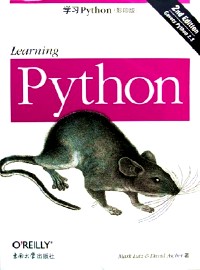
Learning Python = 学习Python / 第二版.
副标题:无
分类号:
ISBN:9787564100476
微信扫一扫,移动浏览光盘
简介
Python是流行、开源、面向对象的编程语言,既可以用于编写单机运行的程序也可以编写脚本程序,具有可移植,强大、易用等特点。跟随专业教师学习是最快捷的掌握此语言的方式。新版的《学习Python》把你带到Mark Lutz和David Ascher面前,他们是著名的Python专家和培训师,他们的用语亲切且组织良好的文章已经指导许多编程者精通这种语言。
对本书第一版的褒奖:
“这本书最好之处在于作者在提供有用的实例与详细解释说明之间取得近乎完美的平衡。无论你是有经验的计算机程序员还是初学者,这本书对于学习Python语言都是非常适合的。”
———Andrew Morrison, CedarLug
《学习Python》(第二版)给程序员提供了一个学习Python和面向对象编程的综合学习工具。它根据1999年该书第一版发布以来语言的大量变化做了更新。本书介绍了最近发布的Python2.3的基本要素并涵盖了新的特性,如列表内涵,嵌套作用域和迭代器/产生器。
除了语言特性,《学习Python》(第二版)还为初级程序员提供了新的内容,包括新的面向对象编程回顾,动态类型,新的关于编程起步和配置选项的讨论,新的关于文档的内容等等。全书用新的实例使得语言特性的应用更加具体。
《学习Python》(第二版)首先给出了理解和构造Python程序必需的所有信息,包括类型、运算符、表达式、类、函数、模块和异常。然后,作者给出了更高级的内容,通过真实的应用和可用扩展库说明如何用Python完成一般的任务。全书提供了练习以检验自己的新技能。
《学习Python》(第二版)是本可灵活选读的图书,它让读者能够集中深入Python语言的核心。随着通读全书,你将获得对Python深入而完整的理解,这将帮助你自己开发大型的应用程序。本书适合于任何不仅仅想停留于了解Python而且想更好的掌握它的人。
目录
preface
part i. getting started
1. a python q&a session
why do people use python?
is python a scripting language?
okay, but what's the downside?
who uses python today?
what can i do with python?
what are python's technical strengths?
how does python stack up to language x?
2. how python runs programs
introducing the python interpreter
program execution
execution model variations
3. how you run programs
interactive coding
system command lines and files
clicking windows file icons
module imports and reloads
the idle user interface
.other ides
embedding calls
frozen binary executables
text editor launch options
other launch options
future possibilities?
which option should i use?
part i exercises
part ii. types and operations
4. numbers
python program structure
why use built-in types?
numbers
python expression operators
numbers in action
the dynamic typing interlude
5. strings
string literals
strings in action
string formatting
string methods
general type categories
6. lists and dictionaries
lists
lists in action
dictionaries
dictionaries in action
7. tuples, files, and everything else
tuples
files
type categories revisited
object generality
references versus copies
comparisons, equality, and truth
python's type hierarchies
other types in python
built-in type gotchas
part ii exercises
part iii. statements and syntax
8. assignment, expressions, and print
assignment statements
expression statements
print statements
9. if tests
if statements
python syntax rules
truth tests
10. while and for loops
while loops
break, continue, pass, and the loop else
for loops
loop variations
11. documenting python code
the python documentation interlude
common coding gotchas
part iii exercises
part iv. functions
12. function basics
why use functions?
coding functions
a first example: definitions and calls
a second example: intersecting sequences
13. scopes and arguments
scope rules
the global statement
scopes and nested functions
passing arguments
special argument matching modes
14. advanced function topics
anonymous functions: ]ambda
applying functions to arguments
mapping functions over sequences
functional programming tools
list comprehensions
generators and iterators
function design concepts
function gotchas
part iv exercises
part v. modules
15. modules: the big picture
why use modules?
python program architecture
how imports work
16. module coding basics
module creation
module usage
module namespaces
reloading modules
17. module packages
package import basics
package import example
why use package imports?
a tale of three systems
18. advanced module topics
data hiding in modules
enabling future language features
mixed usage modes: __name__ and __main_.
changing the module search path
the import as extension
module design concepts
module gotchas
part v exercises
part vi. classes and oop
19. oop: the big picture
why use classes?
oop from 30,000 feet
20. class coding basics
classes generate multiple instance objects
classes are customized by inheritance
classes canintercept python operators
21. class coding details
the class statement
methods
inheritance
operator overloading
namespaces: the whole story
22. designing with classes
python and oop
classes as records
oop and inheritance: "is-a' relationships
oop and composition: "has-a" relationships
oop and delegation
multiple inheritance
classes are objects: generic object factories
methods are objects: bound or unbound
documentation strings revisited
classes versus modules
23. advanced class topics
extending built-in types
pseudo-private class attributes
"new style" classes in python 2.2
class gotchas
part vi exercises
part vii. exceptions and tools
24. exception basics
why use exceptions?
exception handling: the short story
the try/except/else statement
the try/finally statement
the raise statement
the assert statement
25. exception objects
string-based exceptions
class-based exceptions
general raise statement forms
26. oesigning with exceptions
nesting exception handlers
exception idioms
exception design tips
exception gotchas
core language summary
part vii exercises
part viii. the outer layers
27. common tasks in python
conversions, numbers, and comparisons
manipulating strings
data structure manipulations
manipulating files and directories
intemet-related modules
executing programs
debugging, testing, timing, profiling
exercises
28. frameworks
an automated complaint system
interfacing with com: cheap public relations
a tkinter-based gui editor for managing form data
jython: the felicitous union of python and java
exercises
29. python resources
layers of community
the process
services and products
the legal framework: the python software foundation
software
popular third-'party software
web application frameworks
tools for python developers
part ix. appendixes
a. installation and configuration
b. solutions to exercises
index
part i. getting started
1. a python q&a session
why do people use python?
is python a scripting language?
okay, but what's the downside?
who uses python today?
what can i do with python?
what are python's technical strengths?
how does python stack up to language x?
2. how python runs programs
introducing the python interpreter
program execution
execution model variations
3. how you run programs
interactive coding
system command lines and files
clicking windows file icons
module imports and reloads
the idle user interface
.other ides
embedding calls
frozen binary executables
text editor launch options
other launch options
future possibilities?
which option should i use?
part i exercises
part ii. types and operations
4. numbers
python program structure
why use built-in types?
numbers
python expression operators
numbers in action
the dynamic typing interlude
5. strings
string literals
strings in action
string formatting
string methods
general type categories
6. lists and dictionaries
lists
lists in action
dictionaries
dictionaries in action
7. tuples, files, and everything else
tuples
files
type categories revisited
object generality
references versus copies
comparisons, equality, and truth
python's type hierarchies
other types in python
built-in type gotchas
part ii exercises
part iii. statements and syntax
8. assignment, expressions, and print
assignment statements
expression statements
print statements
9. if tests
if statements
python syntax rules
truth tests
10. while and for loops
while loops
break, continue, pass, and the loop else
for loops
loop variations
11. documenting python code
the python documentation interlude
common coding gotchas
part iii exercises
part iv. functions
12. function basics
why use functions?
coding functions
a first example: definitions and calls
a second example: intersecting sequences
13. scopes and arguments
scope rules
the global statement
scopes and nested functions
passing arguments
special argument matching modes
14. advanced function topics
anonymous functions: ]ambda
applying functions to arguments
mapping functions over sequences
functional programming tools
list comprehensions
generators and iterators
function design concepts
function gotchas
part iv exercises
part v. modules
15. modules: the big picture
why use modules?
python program architecture
how imports work
16. module coding basics
module creation
module usage
module namespaces
reloading modules
17. module packages
package import basics
package import example
why use package imports?
a tale of three systems
18. advanced module topics
data hiding in modules
enabling future language features
mixed usage modes: __name__ and __main_.
changing the module search path
the import as extension
module design concepts
module gotchas
part v exercises
part vi. classes and oop
19. oop: the big picture
why use classes?
oop from 30,000 feet
20. class coding basics
classes generate multiple instance objects
classes are customized by inheritance
classes canintercept python operators
21. class coding details
the class statement
methods
inheritance
operator overloading
namespaces: the whole story
22. designing with classes
python and oop
classes as records
oop and inheritance: "is-a' relationships
oop and composition: "has-a" relationships
oop and delegation
multiple inheritance
classes are objects: generic object factories
methods are objects: bound or unbound
documentation strings revisited
classes versus modules
23. advanced class topics
extending built-in types
pseudo-private class attributes
"new style" classes in python 2.2
class gotchas
part vi exercises
part vii. exceptions and tools
24. exception basics
why use exceptions?
exception handling: the short story
the try/except/else statement
the try/finally statement
the raise statement
the assert statement
25. exception objects
string-based exceptions
class-based exceptions
general raise statement forms
26. oesigning with exceptions
nesting exception handlers
exception idioms
exception design tips
exception gotchas
core language summary
part vii exercises
part viii. the outer layers
27. common tasks in python
conversions, numbers, and comparisons
manipulating strings
data structure manipulations
manipulating files and directories
intemet-related modules
executing programs
debugging, testing, timing, profiling
exercises
28. frameworks
an automated complaint system
interfacing with com: cheap public relations
a tkinter-based gui editor for managing form data
jython: the felicitous union of python and java
exercises
29. python resources
layers of community
the process
services and products
the legal framework: the python software foundation
software
popular third-'party software
web application frameworks
tools for python developers
part ix. appendixes
a. installation and configuration
b. solutions to exercises
index
Learning Python = 学习Python / 第二版.
- 名称
- 类型
- 大小
光盘服务联系方式: 020-38250260 客服QQ:4006604884
云图客服:
用户发送的提问,这种方式就需要有位在线客服来回答用户的问题,这种 就属于对话式的,问题是这种提问是否需要用户登录才能提问
Video Player
×
Audio Player
×
pdf Player
×
