

简介
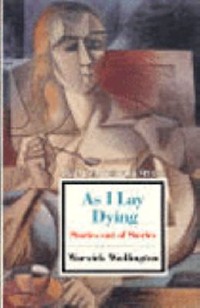
Economically put, William Faulkner's As I Lay Dying is thestory of the death and eventual burial of Addie Bundren, matriarch of the poor, farming, Southern Bundren family, and of the meaning of her death and burial journey to thatfamily. But this is a story that defies a brief summing up. As Addie herself says in the novel, "Words dont ever fit even what they are trying to say at." Especially so few words about such a multifaceted work. Embedded in the text is the secret story of each character's inner life; the tangled ensnaring story the characters live together as a family; the universal story of human beings struggling with the meaning of death; the cultural story of the impoverished 1920s in the rural South; the Americanstory of the struggle between individual desire and the collective good. Faulkner unravels all of these stories - and more - from the impelling event of Addie's death. In this concise critical assessment of the novel, Warwick Wadlington takes the view that each of the stories the novel tells simultaneously grows out of and informs the other, much as people shape and are shaped by one another.Faulkner's tendency to show the reader his fictional worldfrom many different angles and points of view - giving each of the characters, for example, a chance to tell his or her private version of a story - is thus echoed in Wadlington's approach to the novel. The author takes into account the many frames through which As I Lay Dying can be perceived - sociohistorical, psychological, cultural, religious, political, artistic, personal - and synthesizesthem for the reader. Faulkner's novel as a whole, too, is a story pulled out of older stories that would eventually be taken up by newer ones. As I Lay Dying shows the influence of such master narratives as Joseph Conrad's TheNigger of the "Narcissus," Sherwood Anderson's Winesburg, Ohio, James Joyce's Ulysses, and T. S. Eliot's The Waste Land. And it anticipates much 1930's writing, especially John Steinbeck's epic Grapes of Wrath. Faulkner actually began to write As I Lay Dying on the day after the great Wall Street crash of 25 October 1929. He and his novel were thus poised on the brink of enormous change, looking back at a decade that loved risk taking and pleasure and that romanticized rugged individualism - or, perhaps more aptly, rugged entrepreneurship - and forward to a decade that would struggle in a kind of forced collective labor in order to survive - the decade of the Great Depression. The "tightrope walk," as Wadlington calls it, between individualism and collectivism, a long-standing exercise in the South, is a major theme of the novel. Like much else in the book, however, this apparently two-dimensionalissue is "honeycombed with ambivalences and cross-purposes," Wadlington writes. While Faulkner acknowledges the necessity and the good of cooperative action, he also knows that the individual may exploit it for selfish purposes and simultaneously deny this self-interest. As the Bundren family together shoulders the burden of transporting Addie's body to its burial site, each family member also carries the weight of his or her own separate past and keeps pushing ahead toward his or her own distinct goal. In a generous-minded and insightful critique, Wadlington focuses and refocuses the fragments of the Bundren's lives that Faulkner reveals to give the reader a multidimensional portrait of this rich, complex novel.
目录
Note on the references and acknowledgments
Chronology: William Faulkner's life and works
Literary and Historical Context
Cultural Stories: The Roaring Twenties, the Great Depression, and the Rise of the "Rednecks" p. 3
Stories out of Stories I: The Novel's Impact p. 9
Stories out of Stories II: The Critics Comment p. 15
A Reading
What Kind of Book Is This?: Outrage and Family Secrets p. 25
"I would be I": Fragments of Collective Action p. 51
Making the Invisible Visible p. 61
Sacred Economics in Yoknapatawpha p. 83
Life after "Meet Mrs. Bundren": Looking Beyond p. 109
Notes and references p. 113
Bibliography p. 115
Index p. 121
Chronology: William Faulkner's life and works
Literary and Historical Context
Cultural Stories: The Roaring Twenties, the Great Depression, and the Rise of the "Rednecks" p. 3
Stories out of Stories I: The Novel's Impact p. 9
Stories out of Stories II: The Critics Comment p. 15
A Reading
What Kind of Book Is This?: Outrage and Family Secrets p. 25
"I would be I": Fragments of Collective Action p. 51
Making the Invisible Visible p. 61
Sacred Economics in Yoknapatawpha p. 83
Life after "Meet Mrs. Bundren": Looking Beyond p. 109
Notes and references p. 113
Bibliography p. 115
Index p. 121
- 名称
- 类型
- 大小
光盘服务联系方式: 020-38250260 客服QQ:4006604884
云图客服:
用户发送的提问,这种方式就需要有位在线客服来回答用户的问题,这种 就属于对话式的,问题是这种提问是否需要用户登录才能提问
Video Player
×
Audio Player
×
pdf Player
×
